
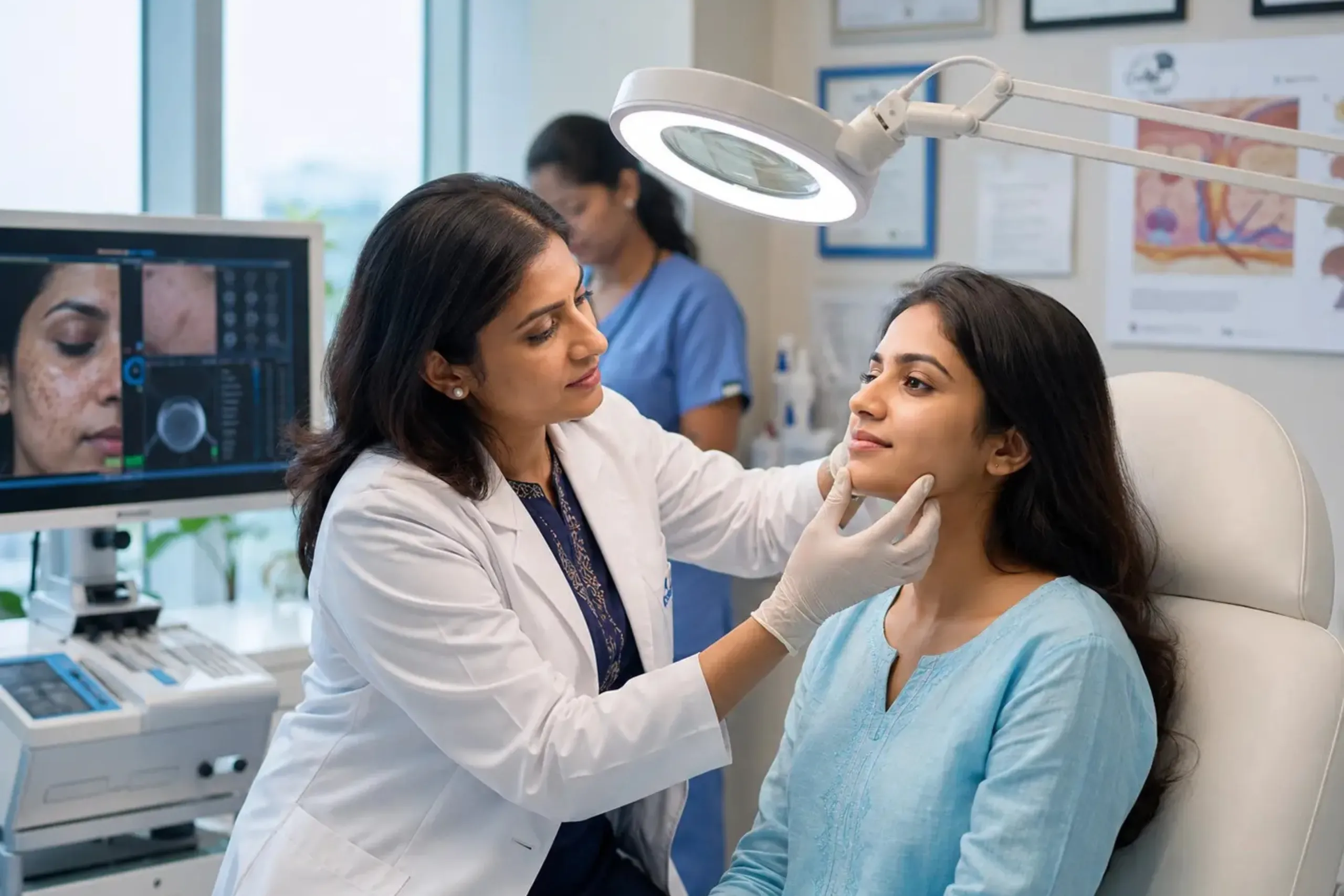
If you are searching for trusted dermatology services in Trivandrum, this guide covers everything you need to know — from the skin conditions treated by expert dermatologists to what you should expect from a comprehensive skin care consultation at a leading hospital in Kerala.
Skin health is more than cosmetic. Your skin is the body’s largest organ, and its condition often reflects your overall internal health. From persistent acne and eczema to chronic psoriasis, pigmentation disorders, and hair loss, skin problems affect millions of people across Kerala — and yet many go undiagnosed or poorly managed for years.
Trivandrum, as Kerala’s capital and a major medical hub, has become a destination for high-quality dermatological care. Patients from across the state — and from neighbouring districts — seek out specialized skin care at hospitals equipped with modern diagnostics, experienced dermatologists, and evidence-based treatment protocols.
This article explains what expert dermatology services in Trivandrum involve, the conditions treated, the treatments available, and how to choose the right facility for your skin care needs.
What Are Dermatology Services and Why Do They Matter?
Dermatology is the branch of medicine dedicated to the diagnosis, treatment, and prevention of conditions affecting the skin, hair, nails, and mucous membranes. A board-certified dermatologist is trained to handle everything from common skin rashes to complex autoimmune skin diseases and early-stage skin cancers.
Expert dermatology services go far beyond prescribing a cream. They encompass clinical diagnosis, laboratory investigations, in-clinic procedures, long-term disease management, and cosmetic treatments — all delivered within a structured, medically supervised framework.
In a city like Trivandrum, where patients have access to tertiary-level hospitals, dermatology departments offer multi-specialty coordination. This is particularly important when skin conditions are linked to systemic diseases such as diabetes, thyroid disorders, or autoimmune conditions.
Common Skin Conditions Treated by Dermatologists in Trivandrum
Dermatologists in Trivandrum manage a wide spectrum of skin conditions. Below are the most frequently encountered categories of skin disease in clinical practice:
- Acne and acne scarring: Hormonal acne, cystic acne, and post-inflammatory hyperpigmentation are among the most common concerns, particularly in adolescents and young adults in Kerala’s humid climate.
- Eczema and atopic dermatitis: Chronic inflammatory skin conditions that cause itching, redness, and dry patches, often triggered by environmental allergens or stress.
- Psoriasis: An immune-mediated disease causing scaly, inflamed skin plaques. Requires long-term management and, in severe cases, systemic or biologic therapy.
- Fungal infections: Dermatophytosis (ringworm), tinea versicolor, and candidal infections are highly prevalent due to Kerala’s tropical climate.
- Pigmentation disorders: Melasma, post-inflammatory hyperpigmentation, and vitiligo require tailored, often combination-based treatment protocols.
- Hair and scalp disorders: Androgenetic alopecia, alopecia areata, seborrheic dermatitis, and telogen effluvium are routinely managed in dermatology clinics.
- Urticaria and allergic skin conditions: Hives, contact dermatitis, and drug reactions require allergy evaluation and targeted management.
- Skin infections: Bacterial infections such as cellulitis, viral infections like warts and molluscum, and parasitic infections including scabies.
- Skin cancer screening: Early detection of melanoma, basal cell carcinoma, and squamous cell carcinoma through dermoscopy and biopsy.
Dermatology Services in Trivandrum: What a Leading Hospital Offers
A leading hospital offering dermatology services in Trivandrum will typically provide a full range of both medical and procedural dermatology services under one roof. This integrated approach reduces the need for multiple referrals and ensures continuity of care.
Medical Dermatology
Medical dermatology forms the core of any hospital-based skin care unit. It involves the diagnosis and treatment of skin diseases using medications — topical, oral, or injectable. This includes the management of chronic conditions such as psoriasis and eczema, acute infections, autoimmune diseases like lupus affecting the skin, and complex allergic disorders.
Evidence-based protocols, updated treatment guidelines, and access to dermatopathology laboratories ensure that diagnoses are accurate and treatment decisions are scientifically grounded.
Procedural and Interventional Dermatology
Beyond medications, modern dermatology departments perform a wide range of in-clinic procedures, including:
- Skin biopsies for histopathological analysis
- Cryotherapy for warts, seborrheic keratoses, and actinic keratoses
- Intralesional injections for keloids, alopecia areata, and inflammatory nodules
- Patch testing for contact allergen identification
- Dermoscopy for accurate evaluation of moles and skin lesions
- Minor surgical excisions for benign and malignant skin lesions
- Phototherapy (narrowband UVB) for psoriasis, vitiligo, and eczema
Cosmetic Dermatology
Cosmetic dermatology addresses aesthetic skin concerns and is increasingly sought after in urban Kerala. Treatments offered at a qualified hospital-based cosmetic dermatology unit include:
- Chemical peels for acne scars, pigmentation, and skin texture improvement
- Microneedling and radiofrequency for scar revision and skin tightening
- Laser treatments for pigmentation, hair removal, and vascular lesions
- Platelet-Rich Plasma (PRP) therapy for hair loss and skin rejuvenation
- Botulinum toxin injections and dermal fillers for anti-ageing concerns
It is important that cosmetic dermatology procedures be performed by qualified medical dermatologists in a hospital or clinical setting — not in unregulated beauty salons — to ensure patient safety and optimal outcomes.
Trichology Services (Hair and Scalp Care)
Hair loss is one of the most emotionally distressing conditions for patients of all ages. Dedicated trichology services within a dermatology unit provide scalp analysis, trichoscopy, blood investigations for nutritional deficiencies and hormonal imbalances, and targeted treatments including topical minoxidil, oral finasteride (where appropriate), nutritional supplementation, and PRP therapy.
Why Choosing a Hospital-Based Dermatologist in Trivandrum Matters
Not all skin care is equal. Visiting a hospital-based dermatologist in Trivandrum — rather than a standalone clinic or beauty centre — offers several distinct clinical and safety advantages:
- Multi-specialty collaboration: Skin conditions often co-exist with systemic diseases. A hospital setting enables seamless coordination with endocrinologists, rheumatologists, haematologists, and other specialists when needed.
- Diagnostic infrastructure: Access to laboratory testing, dermatopathology, allergy testing, and imaging — all within the same institution — reduces delays and improves diagnostic accuracy.
- Qualified specialists: Hospital-employed dermatologists typically hold postgraduate qualifications (MD or DNB in Dermatology) and adhere to institutional protocols and continuing medical education requirements.
- Safe procedural environment: Procedures such as biopsies, laser treatments, and chemical peels carry risks that are best managed in a regulated medical setting with emergency support available.
- Continuity of care: Chronic skin conditions require follow-up, medication adjustments, and long-term monitoring — all of which are best managed within an organized hospital outpatient system.
Neyyar Medicity, a trusted name in healthcare services in Trivandrum, exemplifies this integrated approach — offering patients access to experienced dermatologists within a comprehensive hospital framework designed to deliver evidence-based skin care.
How to Prepare for Your First Dermatology Consultation
Patients who come well-prepared tend to get more out of their first dermatology appointment. Here is what you should bring and consider before your consultation:
- A clear history of your skin concern — when it started, what makes it better or worse, and any previous treatments you have tried.
- A list of all current medications, including supplements and over-the-counter products, since many affect the skin or interact with dermatological treatments.
- Photographs of the skin condition taken at different stages, especially if the condition is episodic (such as urticaria or eczema flares).
- Information about your family history of skin conditions, allergies, or autoimmune diseases.
- Any previous biopsy reports, patch test results, or allergy test findings.
Be specific about your symptoms. The location of the rash, whether it itches, burns, or is painless, and how it has changed over time all provide critical diagnostic information.
Skin Care in Kerala’s Climate: A Dermatological Perspective
Kerala’s tropical climate — characterized by high humidity, heat, and prolonged monsoon seasons — creates a distinct skin care environment. Fungal infections, folliculitis, miliaria (heat rash), and hyperpigmentation are particularly prevalent. Sun damage and photo-ageing are significant concerns given the year-round UV exposure.
Dermatologists practising in Trivandrum have clinical experience tailored to the local environment. They understand the interplay between Kerala’s climate, dietary patterns, water quality, and skin disease prevalence — factors that significantly shape treatment decisions.
For example, management of melasma in a patient from coastal Kerala may differ from a textbook approach designed for temperate climates. Sunscreen selection, topical treatment choices, and lifestyle counselling are all informed by local environmental context.
Conclusion: Expert Dermatology Services in Trivandrum Are Within Reach
Skin disease is common, often distressing, and — when left unmanaged — can significantly affect quality of life. The good news is that Trivandrum is home to experienced dermatologists and well-equipped hospital dermatology departments capable of managing everything from everyday skin concerns to complex chronic conditions.
Whether you are dealing with stubborn acne, a chronic inflammatory skin disease, unexplained hair loss, or a pigmentation concern, seeking care from a qualified dermatologist in a reputable hospital setting is the most reliable path to an accurate diagnosis and an effective treatment plan.
Actionable takeaway: Do not delay a dermatology consultation for a skin concern that has persisted for more than four to six weeks, is spreading, causing significant discomfort, or has not responded to self-care. Early professional evaluation leads to faster resolution and prevents long-term skin damage.
Frequently Asked Questions About Dermatology Services in Trivandrum
What does a dermatologist treat?
A dermatologist diagnoses and treats conditions affecting the skin, hair, nails, and mucous membranes. This includes acne, eczema, psoriasis, fungal infections, pigmentation disorders, hair loss, skin allergies, and skin cancers, among many other conditions.
How do I find a good dermatologist in Trivandrum?
Look for a board-certified dermatologist (MD or DNB in Dermatology) practising in an accredited hospital or reputable clinic in Trivandrum. Hospital-based dermatologists offer the added advantage of access to diagnostic labs, multi-specialty collaboration, and a regulated clinical environment.
What is the difference between a dermatologist and a cosmetologist?
A dermatologist is a qualified medical doctor specializing in skin diseases. A cosmetologist is a beauty professional trained in cosmetic treatments but does not hold a medical degree. For any skin condition — medical or cosmetic — consulting a dermatologist is the safest and most effective choice.
- Is dermatology treatment covered by health insurance in Kerala?
Medical dermatology treatments — including consultations, investigations, biopsies, and phototherapy — are generally covered under most health insurance plans. Cosmetic procedures are typically not covered unless they are medically indicated. Check with your insurer for specific coverage details.
- How long does it take to see results from dermatological treatment?
This depends on the condition being treated. Acne treatments typically show improvement in 6 to 12 weeks. Conditions like psoriasis or melasma may require 3 to 6 months of consistent treatment. Your dermatologist will set realistic expectations based on your diagnosis and treatment plan.
- Are skin treatments safe for dark skin tones?
Yes, when performed by a qualified dermatologist experienced in treating diverse skin tones. Dark skin (Fitzpatrick Types IV–VI, common in South India) requires careful selection of laser parameters, chemical peel strengths, and topical agents to avoid post-inflammatory hyperpigmentation or scarring. Always choose a practitioner with proven experience in treating darker skin tones.
- What skin conditions are most common in Kerala due to the climate?
Due to Kerala’s hot and humid tropical climate, fungal skin infections (such as tinea and tinea versicolor), folliculitis, prickly heat (miliaria), melasma due to sun exposure, and contact dermatitis from sweat and environmental allergens are particularly prevalent.
- Is hair loss treatable at a dermatology clinic?
Yes. Dermatologists are the primary specialists for diagnosing and treating hair loss. Depending on the cause — whether androgenetic alopecia, alopecia areata, nutritional deficiency, or hormonal imbalance — treatments include topical therapies, oral medications, PRP injections, and nutritional supplementation.
- What should I expect during a skin biopsy?
A skin biopsy is a minor in-clinic procedure in which a small sample of skin is removed under local anaesthesia for laboratory examination. It is typically completed in under 15 minutes, causes minimal discomfort, and results are usually available within 5 to 10 working days. It is one of the most accurate tools for diagnosing skin conditions.
- When should I see a dermatologist urgently?
Seek urgent dermatological care if you notice a rapidly spreading rash, a mole that has changed in size, shape, or colour, skin that is blistering or peeling extensively, signs of skin infection such as increasing redness and warmth, or any skin lesion that bleeds without trauma. Early evaluation of these signs is critical.